
Q and A: Jeffrey Gurock, how are we doing?
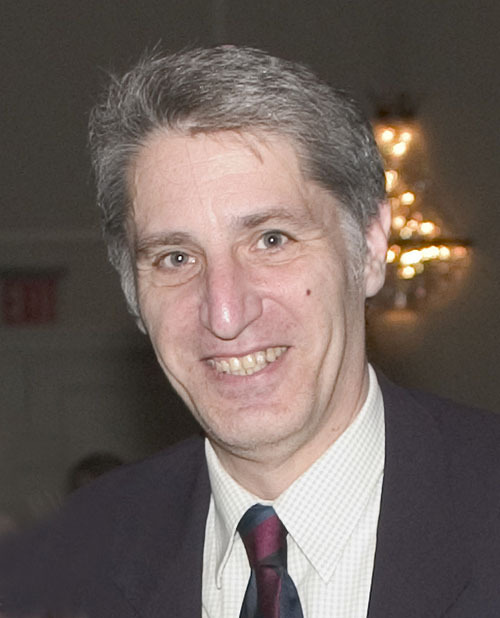


Jeffrey Gurock is the Libby M. Klaperman Professor of Jewish History at Yeshiva University. His most recent book is “Orthodox Jews in America,” a finalist for the 2009 National Jewish Book Awards. ‘
Michael Orbach: So I guess the first question, since you wrote a book about the history of Orthodox Jews in America, is how are we doing?
Jeffrey Gurock: It has been but a year since the book appeared and the major patterns of Orthodox social life that I examined have continued. The central theme in this book is how this group, over three and a half centuries, was challenged by and addressed the complexities of survival in a free new world. Today, on the one hand, Orthodox Jews living in this tolerant country are very comfortable within an accepting society and their specific needs are courted by American businesses.

Social conventions, public policy and economic mobility make it possible to rigorously maintain traditions. And more than ever before in America, those who have chosen to affiliate with Orthodoxy have largely demonstrated strong fidelity to the fulfillment of mitzvoth. In this regard, we are living in a “golden age.” At the same time, the tensions of “Orthodox vs. Orthodox” plague this community. My book offers a balanced account of the now generation-long disputes over women’s roles within Orthodoxy. That issue, more than any other, roils the community.
Readers of my book will meet all of the key actors on all sides of this ongoing_debate. I do not have a viewpoint to push on “where do we go from here,” as I am not a leader but an academic observer. But all indications suggest that external acceptance and internal tensions will be our future fate.
MO: You open your book with a charming vignette about some of the people you grew up with -dedicated men and women who kept most of the required laws, but not all. Do you see that concept of “big-tent” Orthodoxy diminishing?
JG: I am delighted that you characterized the prologue vignette as charming. So many people have told me that they see the story of their parents and grandparents in my account. What has happened since the 1950s-60s is that the numbers of Americanized Jews who identify with Orthodoxy has declined, but those who have remained can be and have chosen (for many of the reasons that I noted earlier) to be more observant than their parents. Many others who felt marginal allegiances towards the most traditional of synagogues have drifted away either to the more liberal movements or they do not identify with religious life. At the same time, interestingly, some of the 1950s patterns of behavior still exist in smaller cities. I discovered this through my travels throughout the United States.
MO: Would you agree with Sociologist Samuel Heilman’s notion that Orthodoxy is “sliding to the right?”
JG: Unquestionably, the punctiliousness of the Orthodoxy of those who came here as refugees and survivors, now into its third generation, has impacted upon the value system of the indigenous community. However, we should be careful not to portray them, nor any group of American Jews, as a monolithic community. I was very careful to search for nuance and variety in styles of religious life
MO: What would you say is the greatest event or accomplishment for Orthodox Jews in America?
JG: The greatest accomplishment of Orthodoxy in America is its commitment to day school education, creating this post-war cadre of highly-committed Jews that live so comfortably in America today. As far as an event that signifies acceptance, remember that a decade ago, an Orthodox Jew was a few “chads” away from becoming vice president of the United States.
MO: What is the greatest crisis facing the Orthodox?
JG: Apart from the issue of tensions from within, the greatest challenge that we live with today is the dilemma of the high cost of day school Jewish education. Since it contributed so much to where Orthodoxy is today, it has to be the one number one communal priority.


