
What do you want to know? Look for it in Tanach
It’s been said by many, too often to enumerate, that “everything is in the Tanach.” Everything.
It’s also been said “no one learns ‘nach’.”
Tanach is the acronym TN”K for Torah, the Neviim and Ketuvim, and includes every book of our Holy canon, from Breishit to the last book of Divrei Hayamim (Chronicles). This is the total of Hashem‘s divinely delivered words, instructions, commandments, rebukes and prophecies to us, His emissaries on earth. We, His Mamlechet Kohanim, Kingdom of Priests (Shmot 19:6), His Am Segulah, Treasured People (Shmot 19:5), are to deliver this message to the world by our speech, writings, thoughts and actions.
But what kind of messengers can we be if we don’t know or learn Tanach (not only the weekly Torah parsha followed perhaps not by the Haftara but by kiddush club)? I tell more people than want to hear, that if you really want to understand what’s going on, don’t go online or open a newspaper or put on Fox News — open the navi and learn.
Yes, it’s opaque at times and there are many commentaries, at times conflicting, but start with the words and choose some commentators to guide you. Better yet, find a teacher or partner, or join the 929 Project — that’s what “learning” is all about.
Thankfully, in Israel, the appreciation of the importance of Tanach has greatly intensified over the years. Besides the aforementioned 929 project (Tanakh B’yachad, learning one chapter per day, five chapters per week to cover all 929 chapters) there is the weeklong series of Tanach lectures and classes during the nine days preceding Tisha b’Av that is attended by thousands of men and women.
Tehillim, more than any book in the canon, is suited to the plight of the soldier in battle, the hostage in a tunnel, Jews everywhere persecuted and oppressed, because the exact words needed are employed by David Hamelech in the same situations! His beautiful and poetic language serves as a template for any Jew in similar straits throughout the generations.
• • •
This has particular resonance on Yom Hazikaron when we recall the mostly young men and women, similar in age to David Hamelech, who have fallen from nearly identical threats; perhaps not from bow and arrow, sword or hails of rocks, but by RPG, gunfire, grenades, and drone strikes.
For this reason, on this day of remembrance, the mournful dirge written by David Hamelech upon the death of King Shaul and his son Jonathan, David’s most beloved friend, have particular poignancy. In 2 Samuel (1:17–27), King David eulogizes them in language so apt as it is poetic, that the text has become a familiar accompaniment to services of remembrance for the fallen all across Israel.
At once amazingly broad in its content and its depth of feeling, it elicits all the emotions of loss, grief, and sadness, while also providing an enormous sense of comfort and purpose.
“HaTzvi Yisrael al bamotecha chalal, aich naflu giborim”-the beauty of Israel is slain upon Your high places, O’ how the mighty have fallen” (ibid, 1:19). This refrain, “O’ how the mighty have fallen,” so powerful that it has become common even in English idiom, expresses both deep grief and remorse over the loss, while simultaneously lionizing the strength and bravery of those who have been struck down. If you do nothing else on Yom Hazikaron , but read these 11 short pesukim-verses, you will capture the essence of what Yom Hazikaron is.
And when we abruptly turn to Yom Haatzmaut, a day of great happiness and appreciation for the first sovereign, independent Jewish state in 2,000 years, we turn to another of David’s compositions — the Hallel, from Tehillim chapters 113 to 118: “Hodu la’Shem Ki Tov, Ki l’olam chasdo (give thanks to Hashem for He is good; His kindness endures forever)” (Tehillim118:1) and “Zeh Hayom Asa Hashem, Nagila v’nismecha vo (this is the day Hashem has made, let us rejoice and be glad in it)” (ibid 118:24).
T
wo days as opposite as can be, yet both appropriately expressed by words found in our same Tanach, in this case by the same divinely inspired author, King David. Words that are timeless and as appropriate now as when they were written over 3,000 years ago. You don’t have to shout them or even sing them. Whisper them to Hashem in Hebrew if you are able, as well as in English so you understand their meaning. If you can, read some commentary on them, easily available online or in the many volumes we have on our bookshelves. You’ll feel so much better.
As the Mishnah might say, here is the general rule:
•If you want to know what to say, readTanach.
•If you want to know what to think, read Tanach.
•If you want to know what to feel, what to expect, how to act, how to begin to understand, read and learn Tanach. It’s all in there.
Shabbat shalom.
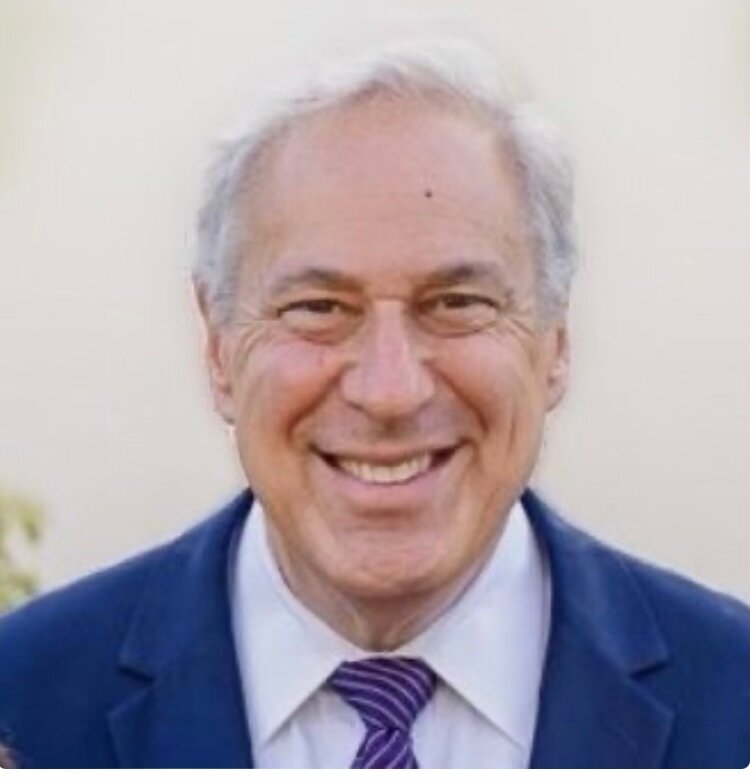
Dr. Alan A. Mazurek is a retired neurologist, living in Great Neck, Jerusalem and Florida. He is a former chairman of the ZOA.
Write: Columnist@TheJewishStar.com


