
The Hippest Rabbi / Maybe baby … Maybe not
The most famous person of 2013 hasn’t been born yet. I’m talking, of course, about the royal baby – the future heir to the British throne who will be the most photographed, tweeted and talked-about newborn of the early 21st century.
As someone who grew up in rainy Manchester, England, it’s beginning to feel like 1982 all over again. From my then child’s vantage point, I watched the nation’s unemployment rate soar, while the Tories introduced austerity measures to reign in spending. The announcement of Charles and Diana’s pregnancy gave ordinary people a reason to “keep calm and carry on.”
As bad as things were back then, at least the government of the day didn’t stoop as low as the current resident of No. 10 Downing Street, who placed a tax on sausage rolls, Cornish pasties and other lowly staples of British cuisine (such as it is). I dearly hope a tax on tea won’t be next; I hear they tend to end badly.
However, there’s a sharper contrast that exists between the royal couple of the 1980s and todays.
Diana was engaged at 19, a bride at 20 and a mother to William before her 21st birthday.
Kate Middleton, on the other hand, was married at 29 and will be a 31-year-old mother. That puts her in perfect step with the times: In the 1960s, the median age for marriage in the United States was 22 for men and 20 for women. Today it is 29 and 27, respectively.
Kate also personifies the typical contemporary young woman, in that she has more formal education than Diana. Today, 55 percent of college graduates aged 25 to 29 are female. Women earned 60 percent of all master’s degrees in 2010.
Obviously, that’s where many of the parallels end. Unlike most newlyweds today, the Duke and Duchess of Cambridge don’t have to worry about personal finances. With every imaginable career — or no career at all — open to him, William trained as an RAF search and rescue helicopter pilot without having to concern himself with the fine print of the Royal Air Forces’ benefits package or its rules about paternity leave.
Kate and William are part of a fortunate minority who graduated from college with zero student debt. (The percentage of college grads, male and female, citing educational debt as their reason for delaying having children has nearly doubled in the last decade.)
That doesn’t mean the rest of us can’t learn a thing or two from the royal couple, however.
We’ve set up society in such a way that men and women in their prime reproductive years are postponing having children — or deciding not to have children at all. Recently released U.S. population census data shows population growth at its lowest level since the Great Depression. Without a sizable, stable tax base to fund them, many of America’s entitlement programs will crumble, along with a decaying infrastructure.
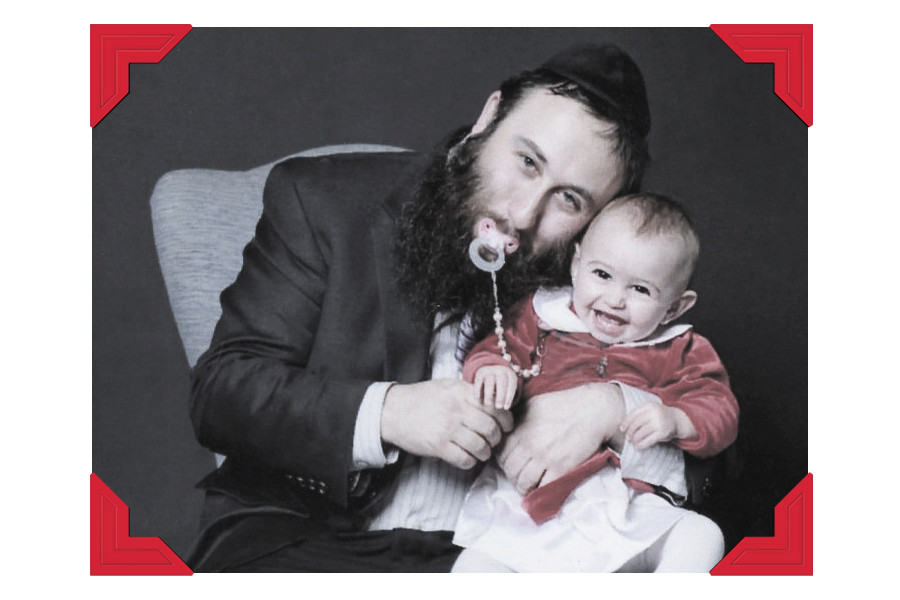
Recently, my wife and I welcomed our fourth child. This means the size of our family is now almost double the official national average.
I doubt many of my fellow New Yorkers would take too kindly to a male rabbi from across the pond appearing to tell women what to do with their wombs. I understand those objections. However, if you’ll allow me to use a very American expression: I just call it like I see it.
And as I see it, the America we all treasure can only thrive when our young people decide to welcome children into their lives.
“Welcome” is the operative word: I confront hostility to my family’s very existence almost every day, and not just in the form of disapproving stares. Progressive New Yorkers don’t hesitate to inform me that I’m being selfish for having so many children. They seem awfully concerned about “saving the planet” – but for whose future enjoyment, exactly? Quite simply, without children, there will be no future to either save or destroy.
Allow me to put on my yarmulke and get biblical for a moment.
In the Torah, the first commandment to humankind is, “Be fruitful and multiply.” Why command people to do something that not only comes naturally, but also guarantees the continued survival of the human race. I sometimes wonder, however, if that long ago command to be fruitful and multiply was actually meant for us modern people, thousands of years in the future — a kind of message in a (baby) bottle that would wash ashore in our postmodern, post-parenting era. The question is: Are we willing to heed it?
Rabbi Simcha Weinstein is a best-selling author who recently was voted “New York’s Hippest Rabbi” by Channel 13 in New York. He chairs the religious affairs committee at Pratt Institute in Brooklyn, and recently published the book, “The Case For Children: Why Parenthood Makes Your World Better.”


