
Song of the nightingale, voice of the turtledove

The name of my shul in Baka, Jerusalem, is Nitzanim, which means “buds or blossoms.” I’ve been associated with this kehilla for 30 years; it comprises what in America would be called Orthodox but spans from dati leumi to chasidish to mesorati and a sprinkling of charedi.
We’ve got Jews of every persuasion — Mizrachi, Ashkenazi, Sfardi, Polish, Hungarian, French, American, British, Asian, Australian, Canadian, you name it. We’ve got Jews of every color — white, black, brown, yellow and red. We’ve got Jews who love Trump and some who don’t (though everyone is somewhat befuddled by him).
What is most striking about this congregation is that under the truly inspired leadership of Rav Shai Finkelshtein, all these Jews generally get along (and in fact enjoy one another’s company). That doesn’t mean we agree on everything (Moshiach is not here, yet), but we can live with our differences in a dignified and respectful — even loving — fashion.
That means the doctor from Teaneck and the businessman from Paris and the Persian textile manufacturer who escaped Tehran before 1979, not only sit and daven together, but go out to dinner together, are friendly with one another; their kids sometimes even marry one another.
Now I know this is by no means unusual in Israel, but that’s the point. Our charismatic, eloquent and effervescent Rav Shai is a big reason for this incredible feeling. A Talmid chacham of the first order who quotes Tanach by heart and gives multiple drashot without notes (in Hebrew, but then repeated in English after davening for the large number of still-not-fluent in Anglo olim).
He remembers everyone’s name and everything about you after meeting you once; his smile and his heart fill the sanctuary Shabbat morning.
All very nice — but this is not the message of this column. It’s the backdrop to what happened this past Shabbat that showed me and many others in the kehilla how prophetic the choice of the name Nitzanim was for this shul.
• • •
Shabbat afternoon after Mincha, accompanied by a wonderful seuda shlishit, we had the privilege of listening firsthand to the story of Sasha (Alexander) Troufanov and his mother Yelena who had been taken hostage on October 7. They spoke of their perilous, torturous experiences — Yelena was released after 44 days; Sasha was set free after 498 days. Yelena’s husband, Sasha‘s father, Vitaly, Hashem Yikom damo, was murdered immediately; Sasha’s grandmother Irena and girlfriend Sapir, were also abducted and later released with Yelena.
Sasha describes the helplessness of trying to hide under a bed with his girlfriend as terrorists surrounded their house, with no means to defend himself. He was stabbed in the shoulder, and when he made an attempt to escape, was shot in both legs, bullets fracturing a bone, and clubbed on the head till blood flowed. But the horrors of their story is not what they or I want to dwell on.
Sasha, an engineer, brilliant in mathematics and facile with languages, already speaking Russian, Hebrew and fluent English, taught himself Arabic while in captivity so he could communicate with his captors. And most striking, Sasha, who was not a religious person, eloquently described how he started to think about his captivity and torture in global Jewish terms.
He did not bemoan his own fate, though he had every reason to, but he analyzed, there must be a reason this happened, there must be a reason I’m still alive.
• • •
He recalled a conversation he had with a soldier on October 6 as he arrived (reluctantly as it turns out, because he had a sense of foreboding) to visit his parents in Kibbutz Nir Oz where they lived. Both agreed, as has been noted by many in the last year and a half, that the divisions in Israeli society, right and left, religious and non-religious, were tearing the country apart. Sasha noted sadly that only a war could bring us together. Months later as he sat in captivity, he thought perhaps this is the war, this is what G-d decreed to bring us all together.
Sasha found G-d.
Released in February 2025, Sasha and his mother, under the guidance of Chabad and the Avichai Foundation, has been learning to be shomer mitzvot, keep Shabbat and lay tefillin. I apologize that my words do not do justice to the profundity of Sasha’s experience, his transformation.
Sitting and listening to him and his mother that Shabbat afternoon was an inspiring and in the greatest sense of the word, an awesome experience. Which leads me to return to the name of the shul — Nitzanim — and why it is prophetic.
The source of the name is the pasuk in Shir Hashirim, Song of Songs, 2:12:
Hanitzanim nir’u baaretz, eit ha-zamir he-gia; v’kol hator nishma b’artzenu (the blossoms are seen in the land, the time of the song of the nightingale has arrived, and the voice of the turtledove is heard in our land).
• • •
Shir Hashirim is debated by Chazal, because on its face it appears to be a love poem between man and woman, which would seem to exclude it from inclusion in the Holy Canon in Tanach.
Yet Rabbi Akiva settled the argument, calling it the “most sacred book of the Tanach — Kodesh Kadashim.” Why? Because the language used is often not literal, and the aforementioned verse is no exception.
The blossoms of spring herald the song of the nightingale and the voice of the turtledove, not only with mellifluous music but more importantly with the message of the coming of the geula, redemption. The song is the song of the love between HaKadosh Baruch Hu, and Am Yisrael, G-d and Israel.
Rabbi Yosef Dov Ber Soloveitchik, tz”l (1903–1993) in Kol Dodi Dofek, an essay based on his speech given to Mizrachi in 1956, uses the very same language of Shir Hashirim to describe the religious significance of the creation of the State of Israel. Almost two centuries prior, Rav Hillel Rivlin of Shklov, tz”l, a student of the Vilna Gaon, wrote the sefer Kol HaTor, the Voice of the Turtle Dove, dealing with the signs relating to the advent of Moshiach. Almost a century later Rav Zvi Hirsch Kalisher, tz“l (1795–1874), applied many of the same thoughts and ideas to encourage aliyah and agricultural development in Eretz Yisrael, contributing to the foundations of modern Zionism.
In captivity, Sasha Troufanov heard the song of the nightingale and the voice of the turtledove. He heard the song not only of freedom, but he heard the song of religious redemption. We in Beit Knesset Nitzanim heard from him the same message as predicted by the pasuk quoted above:
Hanitzanim nir’u baaretz.
When the nitzanim (blossoms) appear in the land, the time of the song of the nightingale and voice of the turtledove will be heard in our land.
Shabbat shalom.
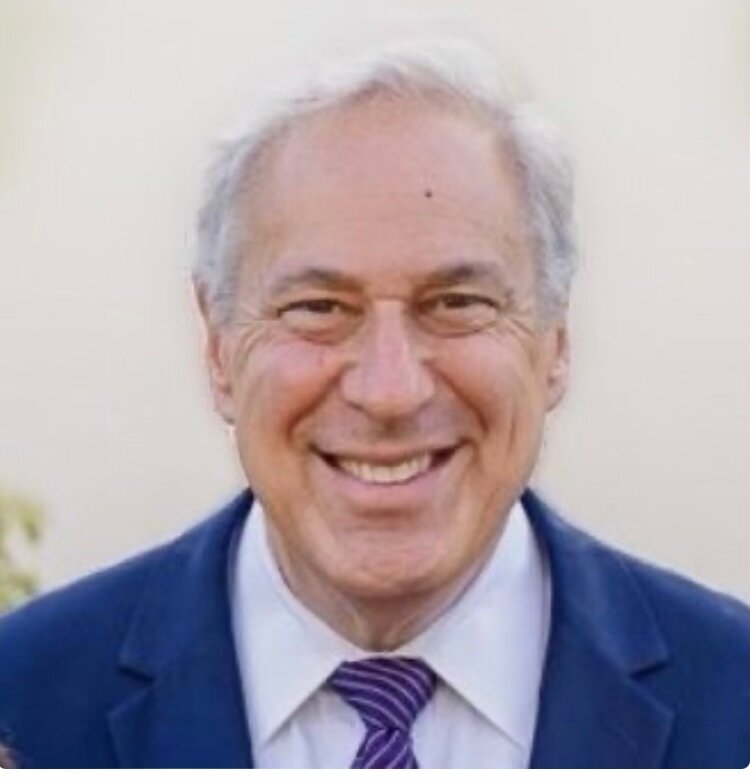
Dr. Alan A. Mazurek is a retired neurologist, living in Great Neck, Jerusalem and Florida. He is a former chairman of the ZOA.
Write: Columnist@TheJewishStar.com


