
From the heart of Jerusalem: Making miracles
“Come on, be a little real!” I told my friend. He had just shared his story of divine intervention with me. Here’s how it went:
For two hours he sat in his seat in the Beit Midrash and learned Talmud. As he finished his individual study and joined the whole Yeshiva for a shiur, he was deeply satisfied by his technical and intellectual accomplishments but still thirsted for the promised religious experience.
As the teacher began class, he was really more than thirsty. He was frustrated and distracted. He had studied Talmud for years and over the last few months had been particularly immersed. He was trying to find G-d and was failing. He decided to play that classic game everyone feels ridiculous playing but nonetheless cannot resist: G-d, if you exist, give me a sign. Or else I won’t believe in you. He told G-d to make the air-conditioner suddenly turn off or make the window suddenly fly open. He waited patiently. When, as he expected, nothing happened, there was still the tinge of disappointment. He was left feeling rather hopeless. As his thoughts calmed down, he suddenly zoned-in on what the Rabbi was teaching, “You don’t need to ask G-d for signs. He’s all around you.”
My friend was excited when he told me this story. Precisely at the moment when he was waiting for G-d to give him a sign, out of nowhere he heard the Rabbi speaking on the very subject, describing the world itself as the sign he sought. This to him was G-d finally answering his plea for a sign.
It’s perfectly explainable, on a scientific level, how this happened. My friend was thinking intensely about “signs” so when he heard the word, his mind grabbed at it and brought him back into the lecture. And it is not so unusual for a Rabbi to be discussing matters of faith. So it was really not such a special scenario at all. Nonetheless, my friend saw this story as miraculous, the hand of G-d. My friend really does understand that such a coincidence is actually rather ordinary, and I have no doubt that one year ago he would have immediately dismissed such an event as just that.
So what was going on? I saw that my friend was consciously suspending rationality. No one had fooled him; he was making a choice—a choice to attribute spirituality to the workings of his life. This was a choice that infused his experiences with meaning, regardless of whether this meaning was objectively real or not. The religious experience may be irrational, but that does not make it invalid.
So then we’re left with the burden of perceiving G-d in the natural and the normal. One might say it’s unfair. In Egypt G-d showed the Jews ten miraculous plagues to affirm their faith. We, on the other hand, are expected to believe without ever witnessing supernatural phenomena.
This question bothered me. But when I posed it to a friend, Steven Fine, he gave me an eye-opening answer. First, let’s assume that anyone who undeniably witnesses G-d’s omnipotence would have unwavering faith in Him. Therefore any witness to the ten plagues would unhesitatingly follow G-d’s every instruction, right? Actually, as Steven pointed out to me, a Midrash teaches that four out of five Jews did not leave Egypt in the Exodus and did not follow G-d into the desert. This suggests that four out of five Jews who were in Egypt and saw the plagues never experienced revelation—the plagues themselves were not apparently divine. Even then, G-d was only visible to the visionary.
Rambam explains that all of God’s miracles conform to the laws of nature. Any miracle can quite easily be brushed off as coincidence—but that is a choice. With Rosh Chodesh Adar II upon us, it’s time for us to start seeing and celebrating the “hidden miracles” of Purim. Ultimately, it’s up to the beholder to make them miracles.
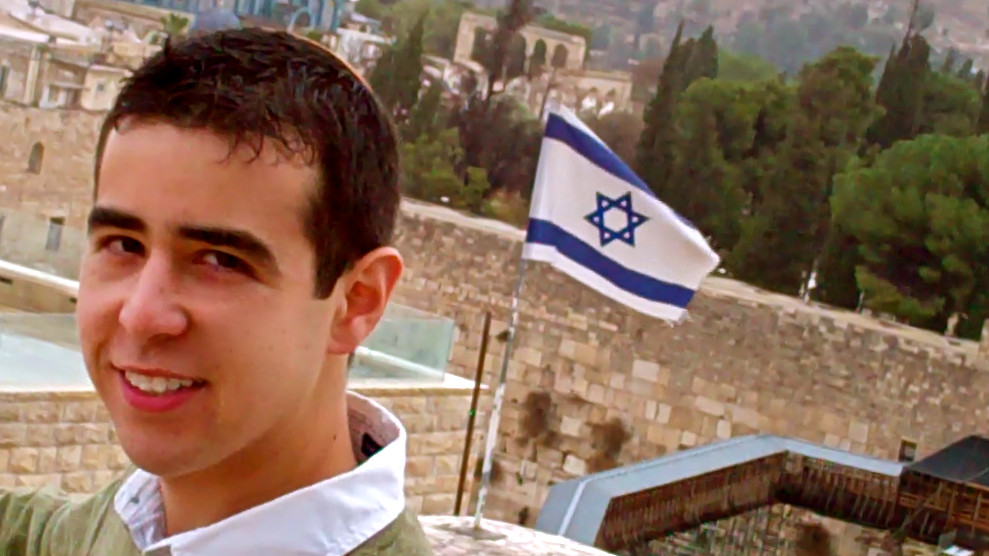
Samuel Fisher grew up in Newton, Massachusetts and graduated from Maimonides School in 2010. He is spending the year studying in Yeshivat Orayta in the Old City of Jerusalem after which he will attend Harvard College.


