
First it’s the field, then the eternal homeland
Every year, Shabbos Chayei Sara is accompanied by a special Jewish gathering in Hevron, the “City of the Patriarchs.” The source for this is our parsha, in which we find Avraham purchasing the “field, and the cave which is in it,” to serve as an “acquisition” and a burial plot for his family.
The strange verse that describes the moment after the purchase is finalized begs for explanation:
Ephron’s field in Makhpelah adjoining Mamre arose. [This included] the field, its cave, and every tree in the field, within its entire circumference. (23:17)
The word which is odd is “arose” (in Hebrew, vayakam) and it appears again in 23:20.
The Midrash Aggadah takes a very literal angle, claiming the land was elevated one-half a cubit so it would be recognizably distinguished from the other fields. One can argue that this is the most plausible explanation. After all, every time the word vayakam appears in the Torah, it means “and he got up.” Usually the person described is going somewhere or heading to do something.
However, since we are talking about a piece of land that is not moving, we have to try to find a more suitable way to explain this word.
Rashi suggests that the word vayakam comes from the word tekumah (rebirth). This reflects the Midrashic approach that Ephron was considered to be a simpleton who happened to own the property, but when it transferred to Avraham’s hands, Avraham, a prince of G-d (23:6), the deed was elevated in ownership. (Midrash Aggadah, Pesikta)
Another possibility is that it comes from the word kayam or l’kayem (to establish). Rabbi Aryeh Kaplan translates the phrase “vayakam s’deh Ephron” to mean “Ephron’s field … thus became [Abraham’s] uncontested property.”
This is the view of the Midrash Sechel Tov, who quotes the verse in Vayikra 25:30 — “v’kam habayit asher ba’ir” (“then the house in the walled city shall become the permanent property of the buyer). (See a similar usage in Vayikra 27:19, and Devarim 18:15. This is also the view of Targum Yonatan, Radak, HaKtav Ve’Hakabalah.)
• • •
The easiest way to explain this “establishment” approach is Rashi’s second one, which is affirmed by Ibn Ezra, that verse 17 is only half a statement, very importantly connected to verse 18. In this light, the word vayakam modifies the word mikneh (purchase), and it demonstrates that the purchase was established.
There is another viewpoint that the first vayakam indicates an affirmation of the sale, while the second vayakam indicates an agreement by the seller(s), ie, the Hittites, that the land could be used a burial ground. (R Chaim Paltiel, Riva, Bkhor Shor, Tur He’Arokh)
Finally, some commentaries focus on the different methods of acquisition.
For example, the Meshekh Hokhmah notes the law in Shulchan Arukh that when a Jew buys from an idolator, he needs to establish the transfer of property through multiple kinyanim, or methods of acquisition (see the Sha”kh as well). The first method, the transfer of money, has the property exit the ownership of the idolator, but the Jew does not yet own it unless there is a document or a chazakah, an act through which ownership is established.
The Seforno suggests that the word vayakam indicates the use of a document. The Meshekh Hokhmah concludes his explanation suggesting that the first appearance of vayakam demonstrates the field going out of Ephron’s ownership, while the second vayakam appears after Avraham actually buried Sara, an act of chazakah — establishing his eternal rights to the property.
It is this chazakah which is reaffirmed every Shabbat Parshat Chayei Sara in Israel and which is the basis for the Jewish People’s intent to never leave our eternal homeland.
• • •
The security situation in Israel today is a reflection of an irony of huge proportions. Two peoples lay a historical claim to a national homeland, in a land that has a very troubled history. One people are more directly connected to the exiled nation that had an established nation-state, while the other claims ancestry to nomads who never had a state but who may or may not have actually lived in the land.
There is no question as to which of these peoples did more for the growth of the land and the establishment of a modern culture over the last 100 years. And, as indicated by the lost opportunity that the 2005 Gaza withdrawal showed the world, the other people are more interested in maintaining a culture of destruction than a culture of productivity.
There is a tale told about Golda Meir — I cannot ascertain its veracity, but the message has nonetheless proven true — that she was pressed at a talk at Princeton in the 1970s as to why UNESCO had rejected Israel and accepted an affiliation by the PLO.
Ms. Meir answered, “As you know, UNESCO stands for the United Nations Education, Science, and Culture Organization. We must assume that these gentlemen, after due consideration, came to the conclusion that the PLO has more to contribute to education, science, and culture than Israel does.”
We are standing on the shoulders of the chazakah established by Avraham. With G-d’s help, we pray we will see the day when the world will acknowledge that the people who have the rights to the land are those who have established a true rebirth in the land.
The Jewish people have proven the ability to bring the best out of the land, something the Arabs have never done throughout history, and that like Hevron, the land belongs to the descendants of the Prince of G-d who was gifted the land by G-d and who, in turn, bequeathed to his children the ability to make the desert bloom.
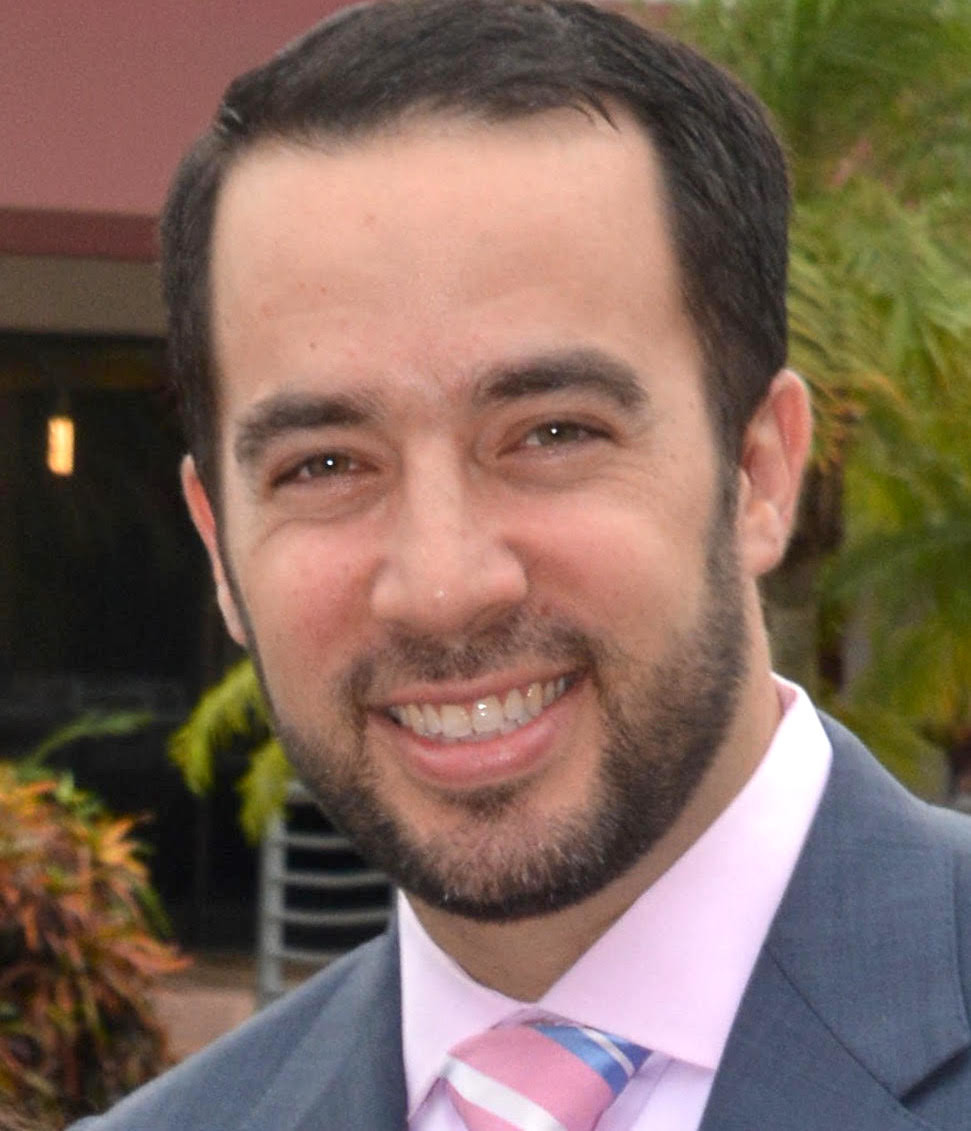
Avi Billet, who grew up in the Five Towns, is a South Florida-based mohel and rabbi of Anshei Chesed Congregation in Boynton Beach. This column was previously published. To reach Rabbi Billet, write: Columnist@TheJewishStar.com


