
Finding proof of life even as we recall death
I am spending this Shabbat Chayei Sara in Hevron at the Mearat HaMachpela, with several members of my family and thousands of other Jews from around the world.
For those of you who have never spent a Shabbat Chayei Sara in Hevron and prayed at the Meara, the Cave of the Patriarchs, I urge you to put it on your “bucket list.” It is an exhilirating experience that will stay with you for a lifetime. In fact, you’ll probably come back again and again, as I did.
• • •
It is interesting that the two parshiyot of the Torah that deal most prominently with death have variants on the Hebrew word Chayim (life) in their name.
I’m talking about this week’s, parsha Chayei Sara, that of course deals with Sara imeinu’s and later Avraham avinu’s passing, and parshat Vayechi, that deals with Yaacov avinu’s passing, as well as his son Yosef‘s passing. Furthermore, the deaths of Rivka and Leah are not explicitly mentioned, but also alluded to, by mentioning the site of their burial in the same parsha of Vayechi. To further connect the theme, all with the exception of Yosef, are buried in the Mearat HaMachpela in Hevron.
While other parshiyot mention the deaths of Yitzchak and Rachel (Vayishlach), Nadav v’Avihu (Shmini), Aharon and Miriam (Chukat) and Moshe (v’Zot Habracha), those deaths are arguably not the most prominent feature of the narrative, but do lend themselves to a discussion all their own, which we will not address here. Since no cognate of chayim is used as the name of any of those parshiyot, the cynics among you would argue that simply is because the reference to life or living is not found in their first verses, and so are not readily available as a shorthand title for the parsha.
I would argue that davka the deaths of certain individuals are pointedly referred to as “life” for a reason. (I do not intend to get into the Talmudic discussion of whether Yaacov truly “died” (Taanis 5b), since the Torah does not use the word vayamot (and he died), but rather will accept that when we speak of death, we are talking about actual death.
• • •
It is apparent that the Torah is making a point of specifically referring to the lives of both Sara and Yaacov, even when talking of their deaths.
Even in death, we talk about life. Why is this so?
Moshe Rabenu, in Sefer Devarim 30:19-20, instructs B’nei Yisrael:
“I call heaven and earth today to bear witness against you: I have placed life and death before you, blessing and curse, and you shall choose life, so that you will live, you and your offspring. To love Hashem, your G-d, to listen to His voice, and to cleave to Him, for He is your life and the length of your days, to dwell upon the land that Hashem swore to your forefathers, to Avraham, to Yitzchak and
“U’vacharta ba chayim (you shall choose life),” the choice is yours!
“Ki Hu chayecha v’orech yamech (for He is your life and the length of your days),” He, Hashem is your Life!
As we read Chayei Sarah this week, and in several weeks parshat Vayechi, we must remember we are a unique people. Though we have faced more death and persecution than any people, we continue to love life, to yearn for life, even as we sometimes must bring terrible death and destruction to our enemies to defeat them for our own self-preservation.
In short, choose life, so that we, our children, all of Israel, and yes, all of life-loving humanity may live.
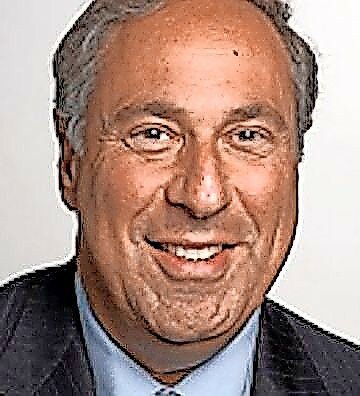
Dr. Alan Mazurek is a retired neurologist, living in Great Neck, Jerusalem and Florida. He is a former chairman of the Zionist Organization of America. To reach him, write: Columnist@TheJewishStar.com


