
Challenges and opportunities of emunah, bitachon
Whenever I am in Israel, I’m always struck by the fact that the word bitachon in modern Hebrew means security or defense (as in Defense Minister is Sar HaBitachon), while in Torah-speak it means trust or faith. It’s even pronounced differently — in modern Israeli Hebrew, the former is pronounced bita-CHON, with the accent on the last syllable, while in typical Ashkenazi Hebrew, the latter is pronounced bi-TA-chon, with the emphasis on the middle syllable.
Then there’s the word emunah. It is usually translated as faith, while trust in modern Hebrew is usually translated as emun or aminut. Confusing isn’t it? Do the words emunah and bitachon mean the same thing or different things? Does it matter? This is not a new question.
The great Chazon Ish, Rabbi Avraham Yeshaya Karelitz, great leader and posek of Lithuanian Jewry in Israel and the world over, who died in 1953, wrote an incredible sefer of mussar (ethics and morality) entitled Sefer Emunah U’bitachon. It was published a year after his death and always remained an opaque tome, difficult to understand, given its flowing, poetic and sometimes ambiguous language and deeply complex concepts.
In 2024 a new more approachable English translation was composed by Rabbi David Nakash. Clearly his translation adopted the idea that emunah is faith and bitachon is trust.
• • •
Practically speaking, the Chazon Ish indicates that emunah is “contemplating the ways and works of Hashem.” He describes himself sitting and contemplating the stars at night, as if in a “trance,” visibly moved with tears streaming down his cheeks”. Another time he had to have a flower removed from his room, because as he inspected it, he was so overwhelmed by the wonder of creation that he “felt faint“.
Regarding bitachon, this is the knowledge that all comes from Hashem, and we must trust in Him no matter what. For that reason, the Chazon Ish was against excessive hishtadlut (human effort). That had practical application when the question arose in the yeshiva to raise much needed funds, and whether the school should purchase a lottery ticket.
The Chazon Ish was firmly against it saying, “one does not need to help Hashem and show Him which pipeline he can use to send money.”
While one could certainly object to this line of reasoning, as is illustrated by the old joke about the Jew, who weekly begged Hashem for a financial windfall, and that he should win the lottery, only to be told by a Bat Kol, a Heavenly Voice, “Reb yid, buy a ticket!“
Still I believe what the Chazon Ish is saying is that emunah is an incredible faith that all we see around us is not happenstance , but the incredible work of Hashem and we should appreciate it, while bitachon is the belief in absolute trust in Hashem, and no matter what the result this is what Hashem wants.
• • •
Rabbi Yoseph Dov Soloveichik of Brisk, the Beis Halevi (1820-1892), great grandfather of the “Rav” (1903-1993), had a somewhat different take on these two concepts. He authored an incredible essay on Bitachon, published almost 100 years after his death, with an English translation recently put out by ArtScroll.
Basing it on principles expressed by the Rambam in his 13 Principles of Faith, (Perush Hamishnayot, Sanhedrin 10), emunah is the faith that Hashem created, orchestrated, and continues to orchestrate ALL activities in the universe, from large to small (with exception of our freedom to believe — hakol bidei shamayim, chutz miyirat shamayim. Bitachon on the other hand is the trust that no matter what, we can rely on Hashem, even if to our small human minds, it seems like the outcome is the worst thing that could happen. It is a trust, that Hashem is interested in my welfare, watching out for me because He is kind, loving and merciful. And while I must do my Hishtadlut, efforts, Hashem is the final arbiter of the results, sometimes not to our liking. But believing that Hashem knows best what is right for us is bitachon.
The Beis Halevi goes even further stating that this trust in Hashem is an imperative mitzvah, and failure to do so is a violation of the negative commandment “not to forget Hashem” (Devarim 6:12). He gives the example of the young inexperienced doctor who was instructed to ask for help if he had a question, but he was uncomfortable doing so, and the patient succumbed. His professor angrily told him “I didn’t give you the option of asking for help. You must ask for help!”
Some say that emuna is the limud, the learning or understanding, while bitachon is the ma’aseh, the performance of the event or activity in question. While I think this is somewhat of an over generalization, the analogy has some merit.
As we watch some of the hostages being released and take some comfort and joy in their familial jubilation, at the same time, we are consumed with anxiety, anger and fear but also hope at the fate of those still held by the Hamas murders.
Are the others alive? If so, in what conditions are they? Will we ever get them all out? What will be the consequences to those released and to their loved ones and families, who have been impaired so physically and emotionally?
Our emunah and bitachon is tested every day. Let us try to internalize the lessons and definitions above to help us get through these profound challenges. For ultimately, despite our long history of challenges “lo yitosh Hashem et amo (Hashem will never abandon His people) (Shmuel 1, 12:22) and Tehillim 94:14). Am Yisrael Chai.
Shabbat Shalom.
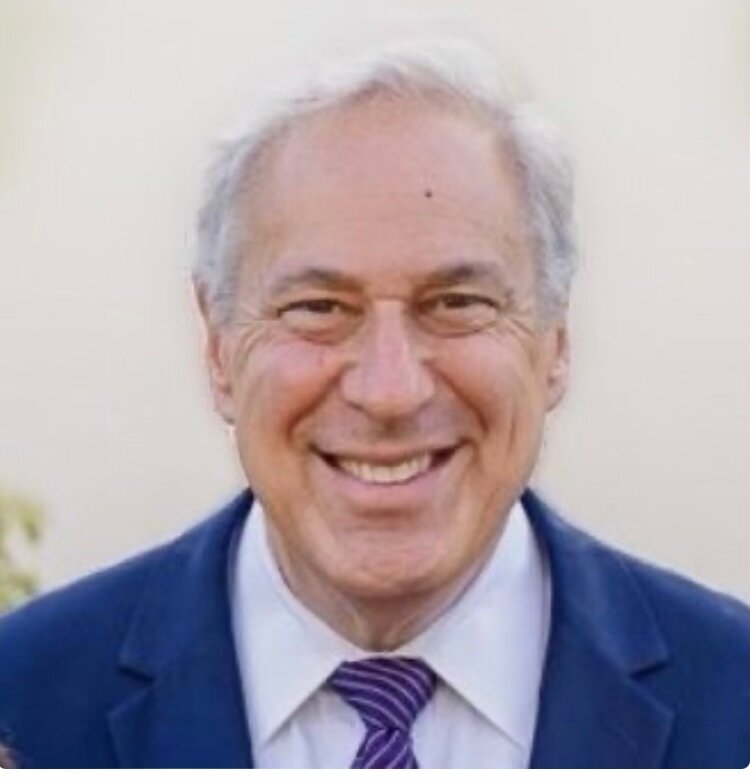
Dr. Alan Mazurek is a retired neurologist, living in Great Neck, Jerusalem and Florida. He is a former chairman of the ZOA.
Write: Columnist@TheJewishStar.com


