
After blood libel, new calls to boycott New York Times
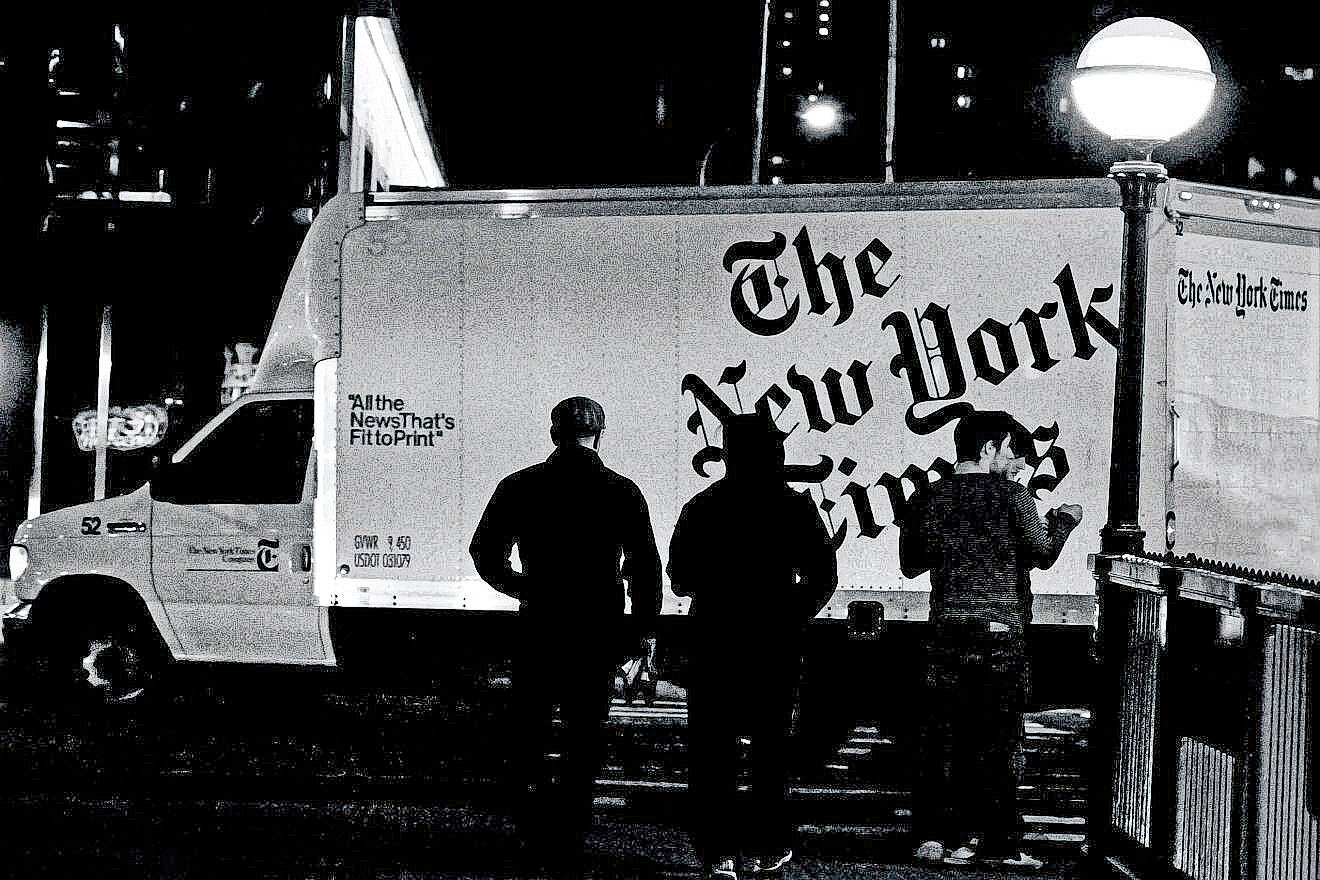
The were fresh calls this week for a boycott of the New York Times after critics accused the paper of publishing a “modern-day blood libel” — a Nicholas Kristof column alleging Israel uses sexual violence against Palestinians as part of its security apparatus.
The backlash erupted after the Times denied rumors that it would retract the Monday opinion piece, which cited claims that Israeli guards were using dogs to sexually assault Palestinian detainees — allegations critics blasted as unsubstantiated, inflammatory and rooted in anti-Israel propaganda.
“There is no truth to this at all,” Times spokesperson Charlie Stadtlander said Tuesday of the retraction rumor.
Stadtlander defended Kristof as “a two-time Pulitzer Prize-winning journalist who has reported on sexual violence for decades and is widely regarded as one of the world’s best on-the-ground reporters documenting and bearing witness to sexual abuse experienced by women and men in war and conflict zones.”
He said Kristof “traveled to the region to report firsthand on the stories of Palestinians who suffered abuse, and his article collects accounts in the victims’ own words, backed by independent studies.”
But critics said the column crossed a dangerous line.
The Israeli Foreign Ministry accused the Times of deliberately publishing the column the night before the release of a Civil Commission report on Hamas’ use of sexual violence during the terror group’s Oct. 7, 2023, invasion.
The ministry said the Civil Commission approached the Times months ago with its report and that the paper said it was “not interested.”
“Aware of the report and its release date, the night before its release, the New York Times ran a shameful attack on Israel, belittling Hamas’ sexual crimes,” the ministry stated. “That tells you everything about the New York Times’ agenda.”
Oren Marmorstein, a spokesperson for the ministry, said Kristof’s column was fabricated and lacked “even a single piece of evidence, while its primary source has known ties to Hamas.”
“More importantly, why did the Times publish this baseless blood libel when it knew that a verified report on Hamas’ sexual crimes was due to be released the very next day?” Marmorstein asked.
In the column, Kristof acknowledged that “there is no evidence that Israeli leaders order rapes” and said he relied on conversations with 14 people who “said they had been sexually assaulted by Israeli settlers or members of the security forces.”
The column cited reports from the United Nations and Euro-Med Human Rights Monitor, including allegations that Israeli guards used dogs to sexually assault Palestinian detainees. Critics described those claims as baseless and accused Kristof of amplifying propaganda.
“Utter depravity from Nick for parroting such cartoonishly evil Hamas propaganda that would make Goebbels blush,” Eitan Fischberger, a Middle East analyst, stated. He said the dog allegation “is the handiwork of Ramy Abdu, head of the Hamas front group called Euro-Med.”
Gerald N. Steinberg, founder of NGO Monitor, wrote that the column was “perhaps the most toxic and idiotic pieces that Nick Kristof has put his name on.”
“A mix of lies sold by a Hamas-front propaganda NGO with zero credibility,” Steinberg said, pointing to Euro-Med, “and ‘eyewitness testimony’ from Hamas terrorists.”
Kristof compared Israeli officials’ rejection of the allegations to Hamas denying that its terrorists raped Israeli women during the Oct. 7 attacks.
“The horrific abuse inflicted on Israeli women on Oct. 7 now happens to Palestinians day after day,” Kristof wrote.
Nadav Pollak, a Middle East studies lecturer at Reichman University in Herzliya, called the column a “blood libel.”
“Any actual case that happened needs to be investigated by Israel, and those that commit crimes need to be arrested and face justice in court, but Kristof here intentionally tries to create a distorted reality, like this is common practice by Israel and compares it to Hamas,” Pollak wrote.
“The New York Times, of course, ran with this blood libel, comparing Israel to Hamas sexual attacks against Israeli hostages,” he added.
Deborah Lipstadt, former U.S. special envoy to monitor and combat antisemitism, condemned the Times for publishing the column.
“Have they, the NY Times, no sense of decency and journalistic responsibility?” Lipstadt wrote.
The outrage quickly turned into boycott calls.
Elliot Malin, an attorney and international law expert, urged Times subscribers to cancel.
“His sourcing was from an entity tied to Hamas and a sexual predator who admitted that he didn’t have anything to verify what he spread,” Malin said of Kristof’s column.
Social media users replied to Malin that they had canceled their subscriptions.
Rabbi Tzvi Pittinsky, director of educational technology at Yeshivat Frisch in New Jersey, said he had not subscribed to the Times for many years, but had occasionally read its articles.
“After this modern-day blood libel by the ‘paper of record,’ I will boycott the Times always,” Pittinsky said. “This is indefensible and inexcusable.”
Bill Ackman, chief executive of Pershing Square, said the Times “ran a disinformation campaign using Nicholas Kristof as the front man.”
“Shut it down,” Ackman said.
The American Jewish Committee also condemned the Times and the column, calling it “a modern-day blood libel in the ‘paper of record’.”
“Allegations of abuse toward Palestinians deserve serious, rigorous investigation,” the AJC stated. “Yet this piece, while opinion, appeared to be presented as an investigative report and fell alarmingly short of that standard while amplifying inflammatory narratives that have real-world consequences in a time of surging hatred toward Israelis and Jews worldwide.”


